
Glass vs. Plastic Food Canisters: An In-Depth Comparison for Health-Conscious Homes
2026-02-22
When looking for ways to store food in your home or business, choosing between glass and plastic food canisters has a big effect on food safety, keeping food fresh, and long-term operating efficiency. Food jars of good quality are important for keeping ingredients fresh and for keeping storage areas organized. Glass containers are better at resisting chemicals and staying stable at high temperatures. Plastic containers are easier to carry and lighter, but they have different safety ratings. Knowing these important differences helps you make smart buying choices that meet the needs of health-conscious customers and businesses in a wide range of settings, from restaurant kitchens to stores.
Comprehending Food Canisters: Materials, Benefits, and Use Cases
Storage bins are an important part of keeping food fresh in both business and home settings. Today, keeping food fresh requires methods that keep it safe from contamination, moisture intrusion, and oxidation while also allowing for effective stocking management.
Core Functions in Commercial and Home Environments
Durable storage systems are important for professional kitchens because they keep ingredients fresh during busy times. When restaurant chains prepare hundreds of pounds of dry goods every day, they need containers that can handle being handled a lot, having their temperatures change, and being cleaned very well. When coffee roasters store expensive beans, they need airtight containers that keep chemical compounds intact and stop moisture absorption that changes the flavors.
In home kitchens, organized pantry systems with clear bins make it easy to see what ingredients are in the food. Baking fans who store flour, sugar, and other specialty ingredients like containers that keep the quality of the goods and make the kitchen look better. To do accurate experiments in a lab, you need to be able to measure things accurately and be resistant to chemicals.
Material Characteristics: Glass vs. Plastic Options
Extremely resistant to heat shock, high borosilicate glass containers can survive temperatures from -20°C to 130°C without losing their shape. This substance doesn't have any pores, so smells can't get in and germs can't grow in tiny surface cracks. Formulations without lead make sure that food is completely safe and keep the clear clarity that shows off what's stored inside.
Alternatives to BPA-free plastic are lighter and easier to handle, but they have different chemical resistant qualities. Advanced polymer formulas lower worries about leaching while offering shatter-resistant performance in areas with a lot of foot traffic. But over time, microscopic scratches appear on plastic surfaces that could house germs even after being cleaned very well.
Best Practices for Selection and Implementation
When choosing a container, it's important to think about how the lid works, how much space it needs, and whether the label will work with it. Basic snap-on designs aren't as good at keeping wetness out as airtight closing systems that use silicone gaskets. Container sizes should be able to hold the usual amount of goods that are bought, and modular stacks should make the best use of store space.
Standardizing container sizes across all activities can help professional procurement teams make it easier to keep track of supplies and replace containers. Custom capacity choices let you store the right amount of ingredients while keeping the same standards for visual display.
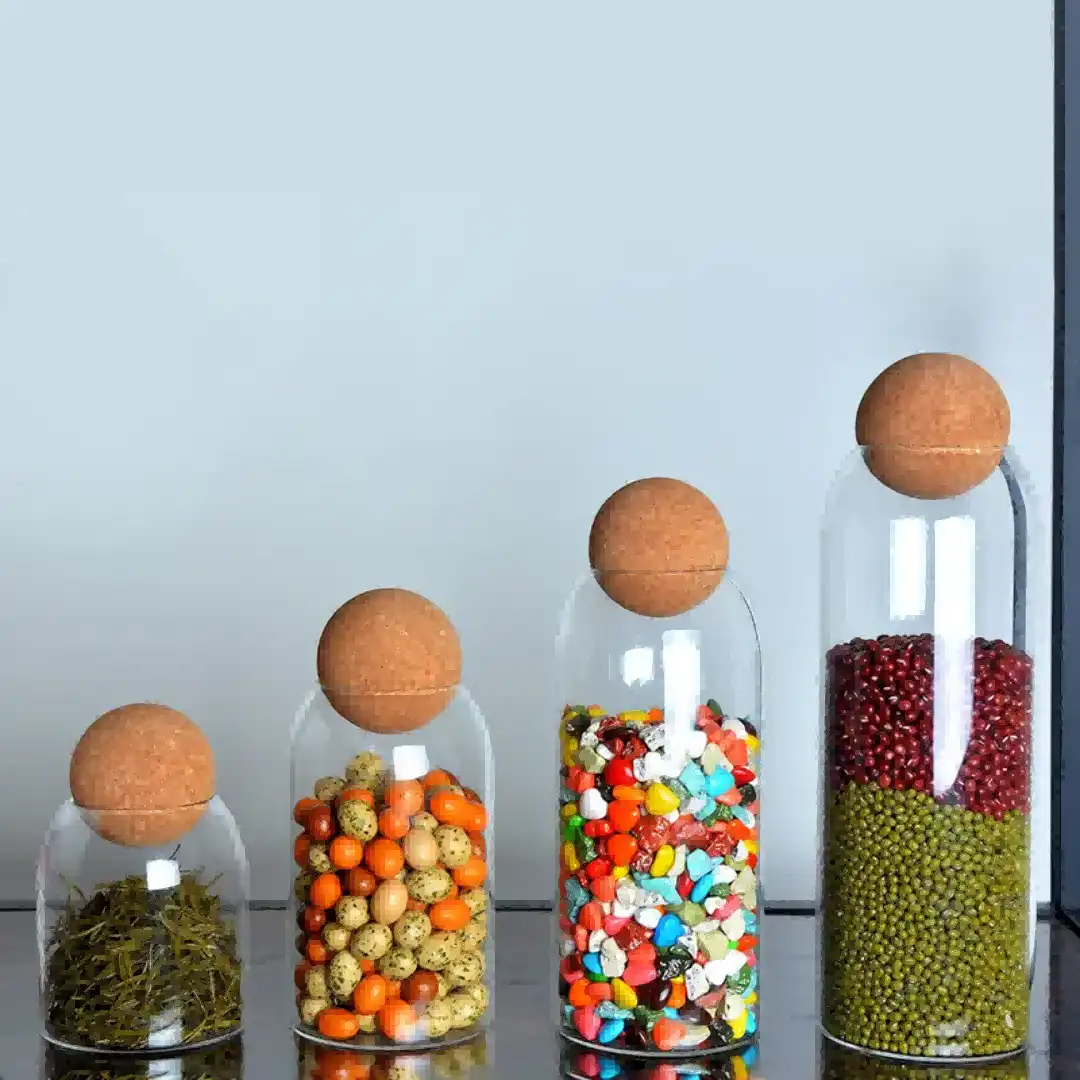
Comparative Analysis of Glass and Plastic Food Canisters for Health-Conscious Procurement
The choice of material has a direct impact on food safety, operating life, and the environmental footprint across various settings. Understanding the factors that influence performance helps you make informed purchasing decisions that align with health-conscious operating standards, especially when selecting food canisters that ensure both quality and sustainability.
Health and Safety Considerations
Chemical stability is very important in uses that come into touch with food. No matter how long they are kept or what temperature they are exposed to, glass cases stay completely inert, so chemicals can't move into stored goods. For acidic ingredients, essential oils, and sensitive chemicals that combine with plastic polymers, this trait is very important.
Even though some plastic products are made without BPA, they may still release small amounts of chemicals when exposed to UV light, high temperatures, or being stored for a long time. Studies show that even approved food-grade plastics can only show little leaching after being exposed to acids or oils for a long time.
How well different materials clean is very different. Using standard industrial cleaning methods, glass surfaces become completely clean, leaving no smells or stains behind. Plastic surfaces need to be handled with care so that strong chemicals don't break down the polymer and germs are completely killed by surface scratches.
Durability and Maintenance Performance
High-quality borosilicate glass lasts a very long time when used in business settings. Scratch resistance keeps the surface in good shape even after years of heavy use, and thermal stability lets you wash it in hot water without damaging the structure. The surface doesn't let flavors move from one kept item to another because it's not porous.
For long-term business, maintenance needs make glass cases the best choice. Commercial machines that work at high temperatures can clean glass surfaces well without damaging the material. Alternatives to plastic need to be washed at a controlled temperature to keep them from twisting and to avoid chemical breakdown that could happen from using commercial cleaning agents over and over again.
Glass cases usually need to be replaced more often than plastic ones because they break more easily. The initial investment costs are covered by the lower number of times the containers need to be replaced. This is especially true in high-volume business settings where containers are cleaned every day.
Airtightness and Freshness Preservation
No matter what the container is made of, the performance of the lid affects how well it stores things. Premium glass cases with precisely machined edges make the best surfaces for silicone covers to seal. This mixture provides better airtightness, which keeps food fresh for longer amounts of time.
Premium goods, like unique coffee beans and artisanal ingredients, last longer when vacuum-sealed systems are combined with glass cases. The stiff glass structure can withstand vacuum pressure without changing shape, so the seal stays intact during storage.
Professionals in the coffee business know that proper keeping is necessary to keep aromatic compounds fresh and stop oxidation. When put in the right places, clear glass containers keep their contents from light and let you see how much product is inside.
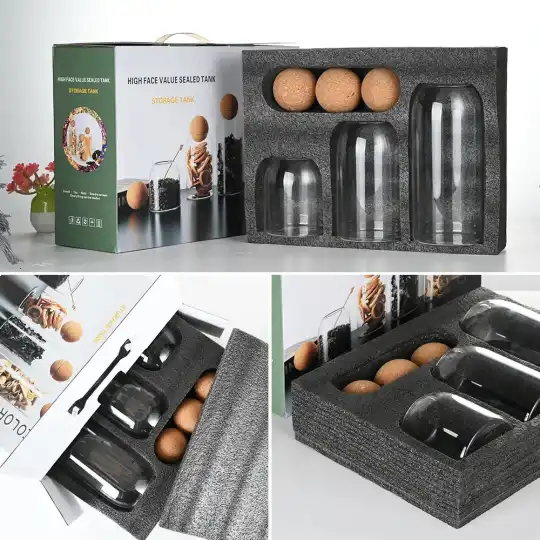
Decision Criteria for B2B Buyers: How to Choose Between Glass and Plastic Canisters?
When doing strategic procurement, you need to consider several factors, such as starting prices, operational requirements, safety standards, and the reliability of the seller. Different businesses prioritize different qualities based on their specific application needs and the regulations they must comply with, especially when selecting products like food canisters that align with both their operational and safety goals.
Industry-Specific Requirements and Volume Considerations
If a restaurant company is in charge of storing a lot of ingredients, they put durability and ease of cleaning ahead of starting cost. When processing hundreds of containers every day, high-volume businesses need materials that can handle a lot of handling without breaking food safety standards. Glass containers work best in these situations because they don't scratch easily and can be cleaned completely.
Businesses that store high-quality products for baking care about both how the goods look and how well they work. Clear glass cases show off the quality of the product inside while keeping it fresh thanks to their superior airtight closing. Custom capacity choices can handle different amounts of ingredients while still meeting brand appearance standards.
In a lab setting, accurate measuring tools and chemical protection are needed for following the right steps for an experiment. Borosilicate glass has graded marks that don't wear off when exposed to chemicals and stay accurate over long periods of time.
Cost Analysis Framework and Long-term Value
Initial investment comparisons need to take into account the total lifetime costs, which include how often the item needs to be replaced, how much upkeep it needs, and how it affects operating efficiency. Glass containers have higher initial costs, but their longer useful life and lower replacing frequency more than make up for it. Businesses usually reach cost neutrality within two years by getting rid of their substitute costs.
Relying on suppliers becomes very important for keeping product levels steady across multiple locations. Established makers offer reliable shipping times and consistent quality, which helps with business planning. Custom capacity choices let you handle your inventory more efficiently while keeping standard processes for buying things.
Quality standards, such as FDA approval and food safety compliance, make sure that rules are followed in all operating areas. Commercial food service businesses need providers who can provide full certification materials and records of tracking because of the paperwork they need to run.
Performance Evaluation Through Case Studies
Specialty coffee stores say that moving from plastic to glass storage systems has helped keep their products fresh longer and improved how customers see them. Presenting products visually in clear cases helps them stand out as high-end, and airtight packing keeps them fresh for longer in stores.
Glass dishes are useful for schools that teach food science because they can be used for both keeping and measuring. Chemical resistance lets it be used for more than one thing, and it keeps the accuracy needed for teaching presentations and experiments.
Practical Tips for Purchasing and Maintaining Food Canisters
Effective procurement strategies involve more than just the initial purchase decision. They also include maintenance procedures, sizing optimization, and feature reviews that maximize a product's practical value and longevity, especially when it comes to food canisters designed for long-term use and efficiency in business settings.
Cleaning Protocols and Maintenance Strategies
Following the right care steps will greatly increase the service life of containers while also making sure they meet food safety standards. Chemical sanitizers and high-temperature washing are just two of the harsh cleaning methods that glass objects can handle without breaking. Professional machines that are set to 180°F get rid of germs while keeping the structure intact.
These all-around cleaning features are very important for businesses that serve food and need to sanitize every day. Although scratches can be annoying, they don't stick to glass surfaces, so they can be cleaned thoroughly for long periods of time.
Cleaning plastic containers needs to be done in a way that balances how well they clean with how long the material lasts. Temperature limits keep containers from bending, and chemical limits keep polymers from breaking down, which would weaken the container's structure. Regular inspections find surface damage that needs to be fixed before it becomes a threat to food safety.
Optimal Sizing and Capacity Selection
The size of the container has a direct effect on how well it stores things and how easy it is to use. For bulk processes, bigger capacity choices that cut down on the number of times things need to be handled while keeping weight limits safe for staff are helpful. Modular size systems let you store things in a way that works for the different amounts of ingredients you have.
Custom capacity development meets the needs of particular operations while keeping production levels at a low cost. Standard sizes usually have lower minimum order quantities than custom sizes, which lets smaller businesses get better container choices.
Labeling compatibility makes sure that inventory management works well by making it easy to find products. Labels can be stuck on flat surfaces with adhesive, and etched markings can be used for permanent identification that can stand up to industrial washing processes.
Value-Added Features and Functionality
Modern methods for closing things better keep air out, which makes preservation work better. Silicone seal systems are better at keeping out moisture than simple snap-on designs while still being easy to use for daily entry needs. Adding a vacuum pump makes it possible for high-quality preserving in a variety of situations, such as storing coffee and doing lab work.
Built-in measurement marks make it easy to measure out the right amount of each item without using extra measuring tools. Graduated scales that are carved into glass surfaces don't wear down or change color when exposed to chemicals, and they stay accurate over long periods of time. These features are especially useful for making tasks that need exact amounts of ingredients.
Stackable designs make the best use of storage area while still making it easy to get to kept items. Interlocking rim systems keep things from moving around while they're being moved and make stable storage arrangements in places with limited room.
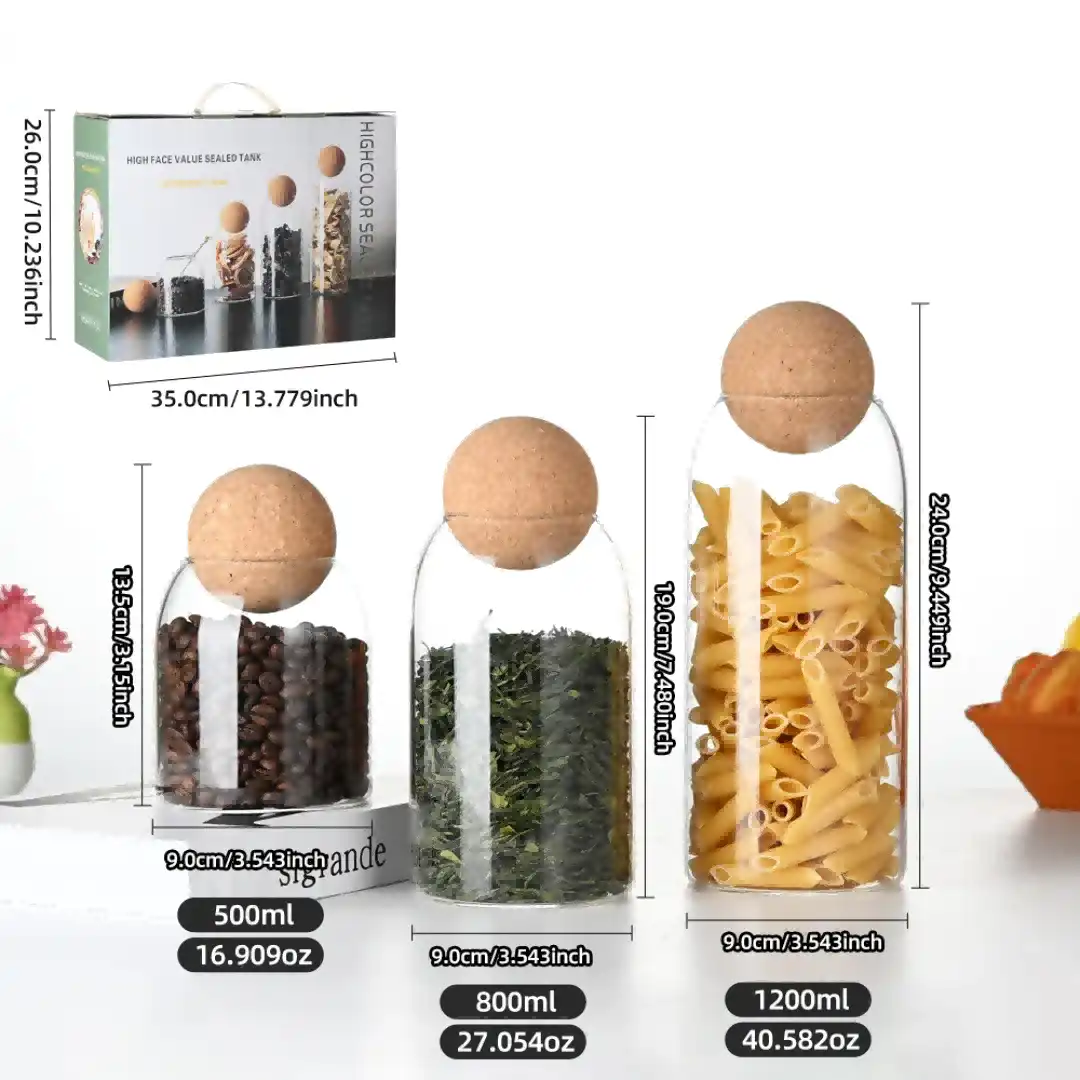
Conclusion
Glass containers are clearly better for health-conscious businesses that prioritize food safety, longevity, and long-term value. With better resistance to chemicals, the ability to fully sterilize, and a longer service life, glass containers more than justify their higher initial cost by reducing the need for replacements and improving operating efficiency. While plastic alternatives are lightweight and easy to carry, glass solutions, such as food canisters, are ideal for high-end uses that need to keep food fresh and maintain professional presentation standards in both business and domestic settings.
FAQ
Q1: Are glass containers safer than plastic for long-term food storage?
A: Glass cases are safer for long-term keeping because they are chemically inert, which means that chemicals can't move into kept goods. Plastic alternatives may release small amounts of chemicals under certain conditions, but glass stays completely stable no matter how long it is stored, how hot or cold it is, or how acidic the product is.
Q2: How do I properly clean airtight containers to maintain food safety?
A: For cleaning to work, you need hot water above 140°F and the right chemicals to get rid of oil buildup and bacterial contamination. Glass containers can go through industrial dishwasher runs at 180°F without breaking down, but plastic containers need to be washed at a specific temperature to keep them from warping and breaking down chemically.
Q3: What advantages does stainless steel offer compared to glass and plastic?
A: Compared to glass, stainless steel is better at withstanding impacts and is easier to handle because it is lighter. It also stays chemically harmless, just like glass cases. However, the opaque material makes it impossible to see what's inside, and custom-sizing options usually require larger minimum order numbers than glass choices.
Partner with Chilin Glass for Premium Food Storage Solutions
Chilin Glass specializes in making high-quality borosilicate glass containers that meet strict industrial standards for food safety, sturdiness, and ease of use. Our eco-friendly, lead-free containers can handle temperatures from -20°C to 130°C and are completely chemical-resistant to keep your products fresh for longer. As a reliable food canisters provider, we offer unique capacity choices, a wide range of colors, and full export support to make the process of buying things from other countries easier. Email our team at sales@chilinglass.com to talk about your unique needs and find out how our high-quality glass products can help your business.
References
1. Journal of Food Science. "Chemical Migration from Food Contact Materials: A Comprehensive Review." Food Safety and Materials Science Research, Vol. 45, No. 3, 2023.
2. American Chemical Society. "Thermal Properties and Chemical Resistance of Borosilicate Glass in Food Applications." Materials Chemistry and Engineering, 2023.
3. International Food Safety Authority. "Guidelines for Food Contact Materials: Glass vs. Plastic Performance Standards." Global Food Safety Standards, 2023.
4. Commercial Kitchen Equipment Research Institute. "Durability Assessment of Storage Containers in High-Volume Food Service Operations." Foodservice Equipment Analysis, Vol. 12, 2023.
5. Environmental Protection Agency. "Lifecycle Assessment of Glass and Plastic Food Storage Containers." Sustainable Materials Research Division, 2023.
6. Food and Drug Administration. "Safety Evaluation of Food Contact Substances: Glass and Plastic Container Comparison." FDA Technical Report Series, 2023.
YOU MAY LIKE