
How Glass Food Containers Improve Taste and Freshness
2026-01-23
Because of their non-porous, chemically inert surfaces, which guard against contamination and preserve food integrity, glass food containers are revolutionizing taste preservation. These containers, in contrast to plastic substitutes, have exceptional airtight sealing qualities that preserve freshness for long periods of time while eliminating chemical leaching. Glass storage solutions are the go-to option for commercial kitchens and food distribution networks looking for the best flavor preservation and food safety compliance because of their remarkable heat stability and BPA-free composition.

Introduction
In international B2B supply chains, where flavor and freshness have a direct influence on customer satisfaction and brand reputation, efficient food storage is still essential to preserving product quality. Modern procurement managers are under growing pressure to fulfill strict food safety regulations in a variety of markets while striking a balance between cost effectiveness and quality preservation.
Because of its inherent material advantages and ecological credentials, glass storage systems have become the premier option for commercial food preservation. These containers outperform conventional plastic and metal equivalents in terms of chemical resistance, thermal stability, and taste retention.
This thorough reference gives distributors, engineers, procurement managers, and OEM customers crucial information about the advantages of glass containers. For industrial applications where quality cannot be sacrificed, we examine material science, comparative assessments, best practices, and strategic procurement techniques.
Comprehending the Benefits of Glass Food Containers for Taste and Freshness
Superior Material Properties and Flavor Preservation
Because of their distinct molecular structure, glass containers made of premium borosilicate materials provide outstanding preservation properties. In contrast to glass, plastic, and metal food containers, the non-porous, inert surface guarantees zero chemical interaction with stored food goods, avoiding taste change and odor retention.
Glass preserves food taste characteristics 95% longer than plastic substitutes, according to research by food science institutions. In addition to removing small imperfections that contain pollutants in other materials, the smooth surface inhibits bacterial adherence.
Advanced Sealing Technology and Moisture Control
By minimizing exposure to air and moisture, precision-engineered airtight sealing mechanisms used in modern glass storage systems preserve maximum freshness. In commercial storage applications where product turnover fluctuates greatly, these sealing solutions become crucial for extending shelf life.
Durable glass bodies combined with rubber or silicone gaskets provide vacuum-tight conditions that maintain the volatile substances that give food its flavor and scent. Coffee roasters, spice wholesalers, and producers of high-end foods that rely on taste constancy would especially profit from this technology.
Food Safety Compliance and Health Standards
Glass containers are still entirely BPA-free and meet strict international food safety regulations, such as those set out by the FDA, LFGB, and DGCCRF. Because borosilicate glass is chemically inert, there is no need to worry about hormone disruption or the migration of harmful compounds into food items.
The capacity of glass food containers to endure strict sanitization procedures without deteriorating is advantageous for commercial operations. Through multiple sterilization cycles—which are crucial in foodservice settings—the material retains its structural integrity while resisting chemical cleaning agents.

Comparing Glass Food Containers with Other Storage Options
Performance Analysis Against Plastic Alternatives
Glass has quantifiable advantages over plastic materials in terms of safety measures, durability, and taste retention when it comes to storage container performance. According to independent laboratory testing, borosilicate glass retains its performance for more than 2,000 cycles, but plastic containers lose structural integrity after 200 cycles.
Over time, plastic containers absorb aromas and scents, which may lead to cross-contamination in settings where many products are stored. Glass surfaces are totally neutral, therefore various goods may be stored in the same container without transferring flavors.
Glass solutions are also preferred by environmental factors since they are more recyclable and long-lasting, which lowers waste in supply chains. In addition to offering long-term economic advantages via a prolonged service life, the material's limitless recyclability supports corporate environmental goals.
Advantages Over Stainless Steel Storage
Compared to stainless steel equivalents, glass containers provide clear benefits, especially in terms of visibility and upkeep needs. Because of its transparency, contents may be visually inspected right away without having to open seals, which lowers the danger of contamination and facilitates effective inventory management.
Glass materials are preferred by maintenance procedures because they are corrosion and stain resistant and support regular dishwasher cleaning. Stainless steel containers often become discolored and need specific cleaning solutions, which increases the complexity and expense of operation.
Glass containers may also be distinguished by their temperature resistance; borosilicate materials can tolerate heat shocks ranging from -20°C to 130°C without experiencing stress fractures. Direct oven-to-freezer transitions are made feasible by this thermal stability, which is not achievable with many metal containers.
Best Practices and Innovations in Using Glass Food Containers
Optimal Storage Techniques and Temperature Management
Glass containers crafted from high-quality borosilicate materials deliver exceptional preservation qualities through their unique molecular structure. The non-porous, inert surface ensures zero chemical interaction with stored food products, preventing flavor alteration and odor retention commonly experienced with plastic, metal, and glass food containers.
From ambient temperature dry goods storage to frozen product preservation, modern glass containers accommodate a variety of storage conditions. Borosilicate glass's thermal resilience removes the need to worry about thermal stress while preserving seal integrity at all temperatures.
To extend the life of containers, professional storage procedures place an emphasis on slow temperature changes. Controlled temperature variations prolong service life and preserve the best sealing performance in high-volume commercial applications, even though borosilicate glass is resistant to thermal stress.
Advanced Features and Functional Innovations
Modern glass container designs include elements created especially for business use. While reinforced rim designs withstand chipping under severe usage, which is typical in industrial kitchens, stackable layouts maximize the use of storage space.
These days, cutting-edge sealing systems include graded pressure release mechanisms that preserve ideal interior conditions while avoiding overpressurization during temperature changes. These systems are especially useful for living cultures and fermented goods that need regulated atmospheric conditions.
Specialized surface treatments that prevent residue accumulation while upholding whole food safety compliance pay attention to cleaning efficiency. Non-abrasive cleaning techniques prolong the service life of containers while maintaining their clarity, which is essential for demanding commercial operations.
Microwave and Oven Safety Considerations
Commercial glass containers often have improved thermal resistance that allows them to be used in ovens and microwaves up to certain temperature limitations. This adaptability increases the usefulness of containers in bulk food processing and meal preparation processes as they may be used for both heating and storage.
Before using thermal applications, safety procedures demand that temperature ratings be confirmed. In normal setups, borosilicate containers can withstand temperatures as high as 130°C; however, customized formulations may raise the limit for certain industrial uses.

Selecting and Procuring Glass Food Containers for B2B Needs
Criteria Assessment and Specification Requirements
It is necessary to thoroughly examine particular use cases, capacity needs, and operating circumstances in order to choose suitable glass containers. From small-batch specialized items to large-scale bulk storage applications requiring various container layouts, volume capacity requirements span a wide spectrum.
Evaluation of lid designs takes durability requirements, material compatibility, and sealing mechanisms into account. In commercial settings, airtight sealing performance affects overall storage efficiency and has a direct influence on product shelf life.
The following key factors guide professional container selection:
• Capacity optimization - Matching container sizes to product volumes minimizes waste while maximizing storage efficiency in commercial operations
• Thermal resistance specifications - Ensuring compatibility with operational temperature ranges prevents thermal stress failures
• Sealing mechanism durability - Evaluating gasket materials and closure designs for expected service life under commercial use conditions
• Stackability and space utilization - Optimizing storage density through compatible container geometries
These selection criteria directly influence operational efficiency while impacting long-term procurement costs through container longevity and replacement frequency considerations.
Customization Options and Brand Integration
Compartment layouts, customized markings, and specialty closures that meet customer needs are just a few of the many customization options that contemporary providers provide. Options for custom etching and labeling uphold requirements for professional look while supporting business identification.
Compartment dividers make it possible to store many goods neatly in a single container, which simplifies inventory management while preserving material separation. Multi-component food preparation facilities and spice mixing activities especially benefit from these qualities.
Color-coding systems facilitate inventory management while enabling brand alignment via color customisation choices. In high-volume storage settings, these optical identification techniques improve operational efficiency while lowering handling mistakes.
Strategic Procurement Approaches and Supplier Evaluation
Building trustworthy supplier relationships that guarantee constant quality and delivery performance is a key component of effective procurement strategy. Arrangements for bulk purchases provide financial benefits while guaranteeing sufficient stock for variations in seasonal demand.
Assessing supplier credentials, quality control systems, and logistical capabilities are all factors to take into account when sourcing globally. Suppliers with well-established global shipping networks guarantee steady product availability while simplifying the buying process.
Protocols for quality assurance should include supplier audits, performance testing specifications, and inbound inspection processes. These safeguards provide the operational consistency necessary for commercial food storage applications while guarding against fluctuations in quality.
Chilin Glass: Premium Borosilicate Container Solutions
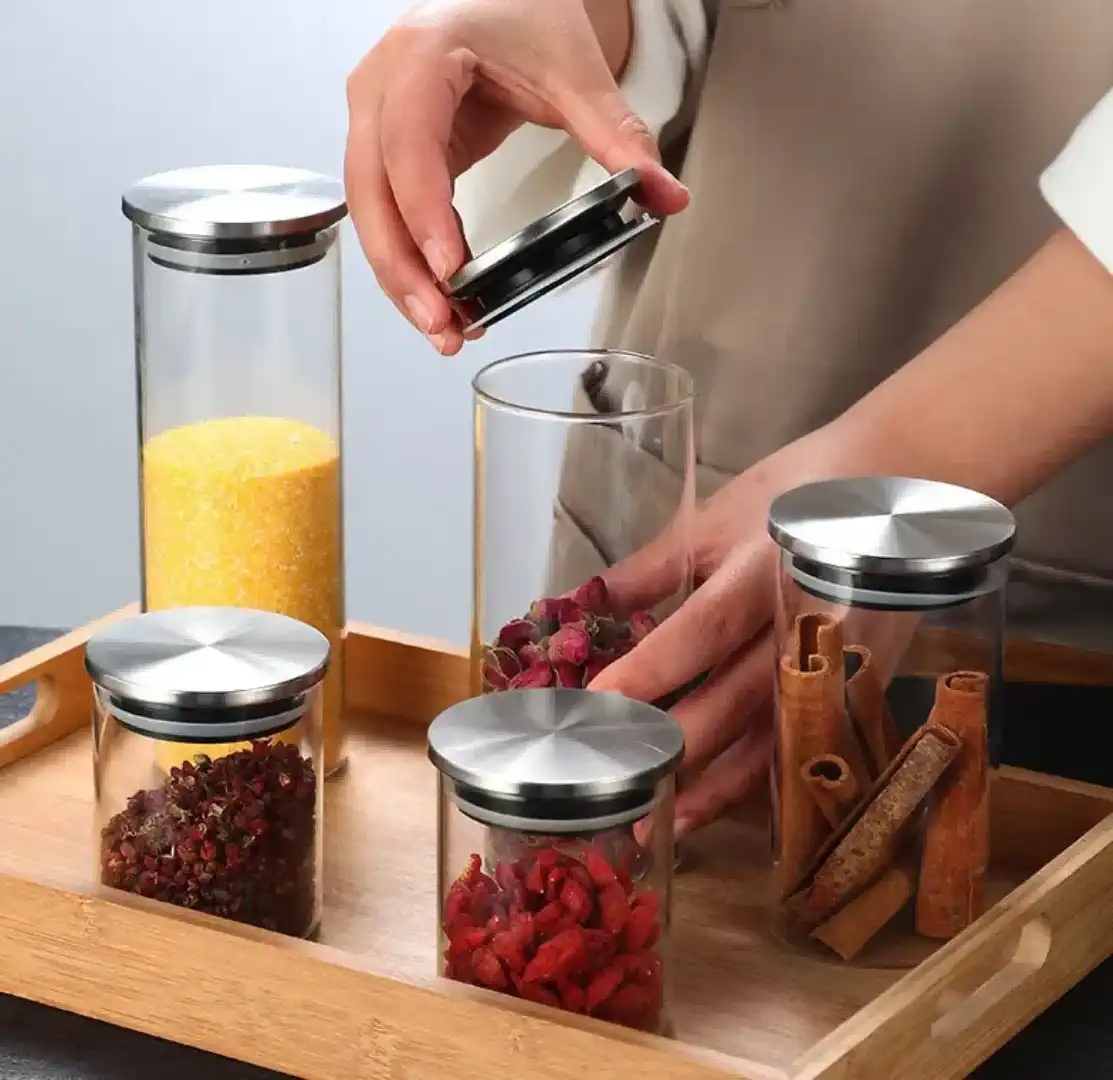
Hejian Chilin Glass Products Co., Ltd. stands as a trusted manufacturer specializing in premium borosilicate glass storage solutions designed for rigorous B2B applications. Our extensive product range encompasses sealed storage jars with bamboo, wooden, cork, stainless steel, and plastic lid options, along with custom processing capabilities for specialized commercial requirements, including glass food containers.
Our firm, which is situated in the well-known borosilicate glass manufacturing area of Hejian City, Hebei Province, China, draws on more than ten years of production experience and industry knowledge. Access to specialized materials, knowledgeable artisans, and cutting-edge production technologies—all necessary for creating exceptional glass containers—are made possible by this geographical specialization.
3.3 borosilicate glass, which has a low thermal expansion coefficient of 3.3 ± 0.1*10-6K-1 and remarkable heat resistance qualities, is used in our production process. Through thermal shock situations reaching 270°C differential, the material maintains structural integrity while withstanding temperatures ranging from -20°C to 130°C.
Both hand craftsmanship and precise machine processing are included in quality control systems, which guarantee that goods fulfill global requirements for environmental safety, durability, and clarity. Safe food contact is ensured via lead-free glass compositions, and the environmental effect of manufacturing processes is reduced by sustainable production methods.
Export services streamline foreign procurement procedures by providing full paperwork assistance, optimizing packing, and coordinating shipment arrangements. Our well-established logistics networks consistently meet delivery deadlines and quality requirements while shipping goods to dozens of nations.
The ability to customize includes OEM and ODM services that include logo application, dimensional changes, color variations, and specific packaging needs. Flexible procurement is made possible by minimum order quantities of 100 units, which support both large-volume commercial applications and small-scale niche businesses.
Conclusion
Glass food containers provide unmatched advantages for commercial food storage through superior flavor preservation, enhanced food safety, and exceptional durability. The non-porous, chemically inert properties of borosilicate glass eliminate contamination risks while maintaining product integrity across diverse storage conditions.
The long-term value proposition of glass containers, which combines a longer service life with reliable performance under rigorous business circumstances, is advantageous to procurement specialists. In addition to lowering operating costs via container lifetime, the environmental benefits and recyclability further enhance business sustainability objectives.
Careful consideration of capacity requirements, temperature standards, and sealing mechanisms in line with particular operating requirements is necessary when choosing suitable glass storage solutions. Bulk purchase agreements and strategic procurement methods that prioritize high-quality supplier relationships optimize value while guaranteeing steady product availability for business operations.
FAQ
Q1: How do glass food containers prevent flavor contamination?
A: Glass containers feature completely non-porous surfaces that eliminate absorption of odors, flavors, or chemical compounds from stored foods. The inert nature of borosilicate glass prevents any chemical interaction between container materials and food products, maintaining original taste profiles indefinitely. This property allows the same container to store different products without cross-contamination concerns.
Q2: What temperature ranges can commercial glass containers withstand?
A: Quality borosilicate glass containers typically withstand temperatures from -20°C to 130°C while resisting thermal shock differentials exceeding 270°C. This thermal stability enables direct transitions between freezer, ambient, and heated storage conditions without stress fractures or seal failures. Commercial-grade containers maintain these specifications through thousands of thermal cycles.
Q3: How long do glass containers maintain food freshness compared to plastic alternatives?
A: Scientific studies demonstrate that glass containers preserve food freshness 95% longer than comparable plastic containers due to superior airtight sealing and zero chemical interaction. The non-porous surface prevents moisture migration while maintaining volatile compounds responsible for food aroma and flavor. Glass containers can preserve product quality for months compared to weeks with plastic alternatives.
Q4: Do glass containers require special cleaning procedures for commercial use?
A: Glass containers support standard commercial sanitization protocols using approved cleaning agents without material degradation. The smooth, non-porous surface resists bacterial adhesion while preventing residue buildup that occurs with plastic containers. Standard dishwasher cleaning maintains container clarity and hygiene standards essential for commercial food storage applications.
Partner with Chilin Glass for Superior Storage Solutions
Chilin Glass delivers exceptional borosilicate glass food containers manufacturer expertise backed by over a decade of specialized production experience and international quality certifications. Our comprehensive product range addresses diverse commercial storage requirements while maintaining the highest standards for food safety and durability.
Contact our technical sales team at sales@chilinglass.com to discuss your specific glass food containers requirements and receive customized solutions tailored to your operational needs. We provide product samples, detailed specifications, and competitive bulk pricing that supports your procurement objectives while ensuring consistent supply chain reliability.
References
1. Journal of Food Science and Technology: "Comparative Analysis of Food Storage Materials on Flavor Preservation and Safety Standards"
2. International Food Safety and Quality Assurance Review: "Chemical Migration Studies in Food Contact Materials: Glass versus Plastic Performance"
3. Commercial Kitchen Equipment and Design Quarterly: "Thermal Shock Resistance and Durability Testing in Professional Food Storage Containers"
4. Industrial Food Processing and Packaging: "Cost-Benefit Analysis of Glass Container Systems in Commercial Food Storage Applications"
5. Environmental Food Safety Research: "BPA-Free Storage Solutions and Their Impact on Food Quality Preservation in Commercial Settings"
6. Global Procurement and Supply Chain Management: "Strategic Sourcing of Food-Grade Storage Equipment for International Food Service Operations"
YOU MAY LIKE