
OEM Glass Canisters: What Buyers Should Know
2026-01-25
Buyers must manage a number of intricate factors, including supplier dependability, material quality, and customization potential, when choosing OEM glass canisters for commercial applications. Glass canisters' remarkable durability, chemical resistance, and environmental sustainability have made them the go-to storage option for a variety of sectors. Businesses may make well-informed procurement choices that satisfy operational needs and sustainability objectives while guaranteeing long-term value by knowing the essential characteristics that set excellent OEM glass canister suppliers apart.

Understanding Glass Canisters: Types, Benefits, and Applications
The market for glass containers nowadays provides a wide range of choices made to satisfy various commercial and industrial storage requirements. Because of its remarkable resilience to heat shock and chemical inertness, borosilicate glass has emerged as the gold standard for high-end applications. This cutting-edge material is perfect for applications needing both refrigeration and heat exposure since it can tolerate temperature swings between -20°C and 130°C.
Material Composition and Quality Standards
Compared to conventional soda-lime glass compositions, borosilicate glass is a major development. While the lead-free composition guarantees total safety for applications involving food contact, the reduced thermal expansion coefficient (3.3 ± 0.1*10-6K-1) offers greater stability across temperature changes. The strong light transmittance of the material keeps the product visible while shielding its contents from contamination.
Containers with crystal clarity and dimensional uniformity are the product of manufacturing methods that combine hand skill with precise equipment. These manufacturing techniques guarantee that every canister satisfies the exacting quality requirements needed for professional usage in laboratory, pharmaceutical, and food service settings.
Versatile Lid Configuration Options
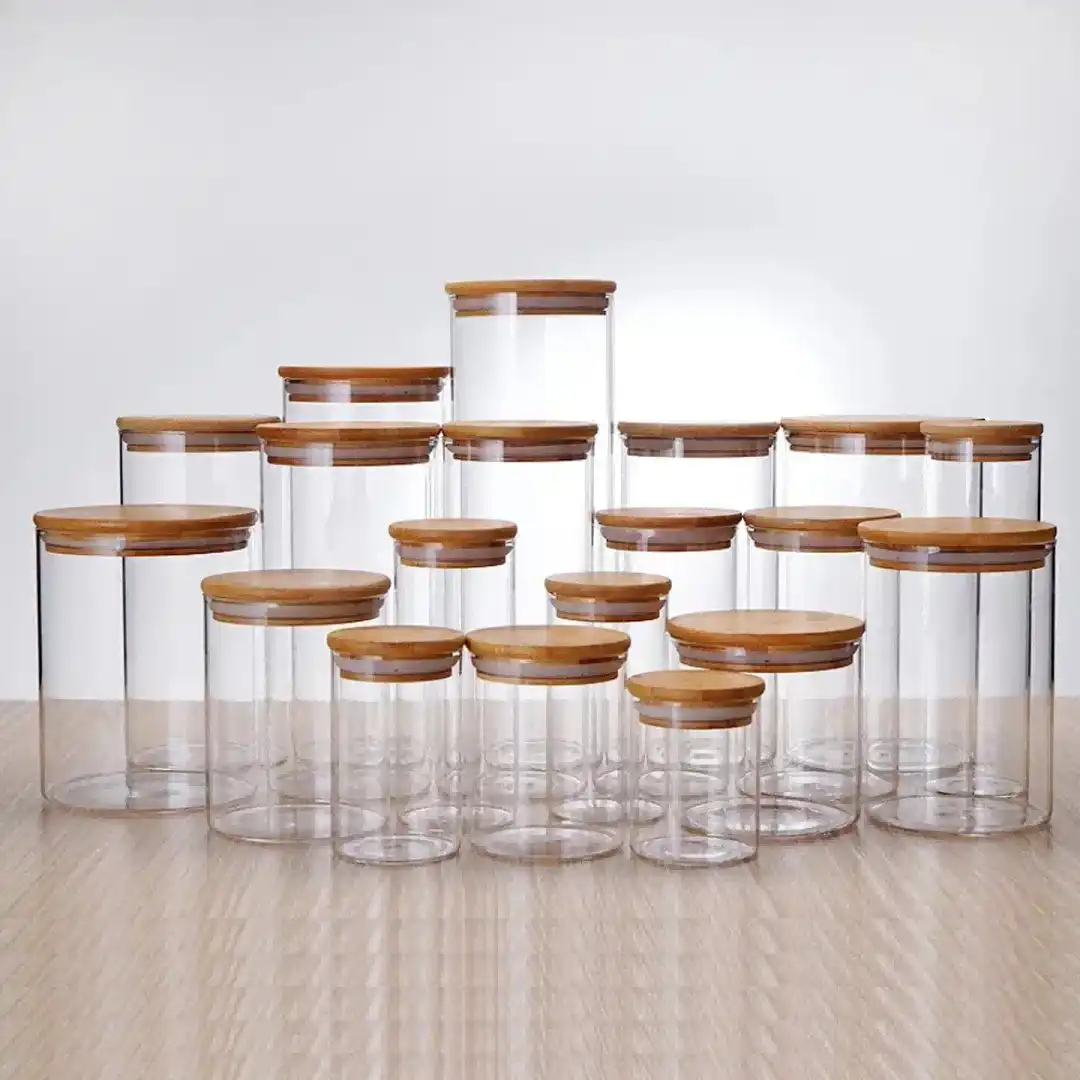
Functionality and aesthetic appeal are greatly impacted by the choice of lid materials. With embedded silicone gaskets, bamboo lids provide superior sealing qualities in addition to their inherent attractiveness. Brands who care about the environment and want to improve their green credentials without sacrificing product quality will find these sustainable choices appealing.
Stainless steel lids provide outstanding durability and corrosion resistance together with contemporary looks. Plastic substitutes provide lightweight convenience and adjustable color matching, while cork substitutes give rustic appeal appropriate for handmade products. Precision-engineered gaskets are included in every configuration to guarantee airtight sealing and the best possible retention of freshness.
Industry-Specific Applications
The heat-resistant qualities and stackable designs that optimize storage efficiency in back-of-house settings are advantageous to food service companies and restaurant chains. The non-porous surface keeps ingredients intact in a variety of culinary applications by preventing odor absorption and taste transmission.
Premium components like coffee beans, specialized flours, and artisanal sugars are preserved in quality by baking and coffee companies using their excellent sealing qualities and visual attractiveness. Transparent walls improve product display in retail settings and make inventory monitoring simple.
Containers that satisfy stringent chemical resistance requirements and provide precise measuring capabilities are necessary for laboratories and educational establishments. Because borosilicate glass is chemically inert, it doesn't react with materials that are kept, protecting sample integrity and experimental precision.

How to Choose the Right OEM Glass Canisters for Your Business?
Selecting appropriate glass storage containers, such as Glass Canisters, requires careful evaluation of multiple technical and operational factors. The decision-making process must balance performance requirements with cost considerations while ensuring compatibility with existing operational workflows and brand positioning strategies.
Material Selection Criteria
When compared to traditional alternatives, borosilicate glass provides better performance qualities, especially in terms of chemical compatibility and resistance to heat shock. The material is perfect for applications requiring hot filling procedures or temperature-sensitive storage needs since it can tolerate abrupt temperature fluctuations without experiencing structural breakdown.
The lead-free formulation gives customers who are concerned about their health piece of mind while guaranteeing full compliance with food safety requirements. For firms aiming to reach premium market niches where consumer perceptions of product safety and quality have a direct influence on purchase choices, this certification becomes especially crucial.
Customization Capabilities Assessment
The capacity of suppliers to meet certain customized needs without sacrificing quality or delivery schedules is critical to the success of OEM collaborations. While preserving essential performance features, color modification choices allow for brand distinction. Custom package options and logo integration improve brand awareness all the way through the supply chain.
Optimizing size is essential for both customer happiness and operational effectiveness. Businesses may develop extensive product lines that cater to a wide range of consumer demands while preserving a consistent brand appearance across all offers thanks to many capacity choices.
Performance Evaluation Framework
Customer happiness and product shelf life are determined by the efficacy of airtight sealing. Testing procedures should confirm seal integrity under a variety of environmental circumstances, such as the temperature and humidity swings typical in commercial storage settings.
Stackability characteristics save shipping expenses while optimizing storage efficiency. Effective stacking mechanisms lower the danger of breakage and the related replacement expenses by preventing sliding and maintaining stability during handling.
Procurement Considerations: Pricing, Suppliers, and Customization
Effective procurement strategies require comprehensive understanding of pricing structures, supplier capabilities, and quality assurance processes. Market analysis reveals significant variations in pricing based on material quality, customization complexity, and production volumes.
Pricing Structure Analysis
The main factor influencing price is material costs; borosilicate glass is more expensive than typical soda-lime substitutes. However, by lowering the frequency of replacements and improving product protection, the better performance attributes often make the extra expense worthwhile.
Measurement marks, high-end finishes, and unique lid configurations are examples of customization elements that increase prices yet provide substantial value in the form of improved usefulness and brand distinction. Bulk procurement is a desirable choice for high-volume applications as volume pricing structures sometimes provide significant discounts for large-quantity orders.
Supplier Evaluation Criteria
An evaluation of production capacity guarantees that suppliers can fulfill both initial orders and projected expansion needs. Compared to companies that depend on third-party manufacturing agreements, established manufacturers with dedicated production facilities exhibit higher levels of reliability.
Standards for quality certification provide unbiased assessments of a supplier's competence and dedication to quality. International certifications guarantee consistent product performance across manufacturing batches and show conformity to international quality standards.
Delivery schedules and transportation costs are influenced by geographic location, especially for applications that need prompt delivery. Through volume agreements with carriers, suppliers with well-established international logistics networks may provide better shipping costs and more dependable delivery dates.
Quality Assurance Protocols
Both material attributes and functional performance aspects should be included in thorough testing processes. While pressure testing validates seal integrity under many situations, thermal shock testing validates claims of temperature resistance.
Batch consistency monitoring detects any problems before they affect customer satisfaction and guarantees consistent quality across big production runs. Frequent quality audits provide continuous confirmation of suppliers' performance and compliance with defined requirements.
Maintenance, Cleaning, and Sustainability of Glass Canisters
Proper maintenance protocols significantly extend the operational lifespan of glass storage containers, including Glass Canisters, while preserving their aesthetic appeal and functional performance. Understanding optimal cleaning procedures prevents damage while maintaining hygiene standards required for food service and laboratory applications.
Cleaning Best Practices
Non-abrasive cleaning techniques eliminate impurities and residues while maintaining surface integrity. While specialty detergents remove tough residues without sacrificing glass clarity or seal performance, warm soapy water works well for the majority of applications.
In high-volume operations, dishwasher compatibility streamlines cleaning processes while maintaining uniform hygienic requirements. To avoid thermal stress that might jeopardize structural integrity, temperature settings should be within manufacturer recommendations.
Environmental Impact Considerations
Because glass containers are completely recyclable and chemically stable, they have better sustainability profiles than plastic counterparts. Glass's inert nature eliminates worries about microplastic contamination while preventing hazardous materials from leaking into stored goods.
Glass containers provide outstanding value due to their prolonged usage and full recyclability at the end of their useful lives, according to lifecycle analysis. Compared to single-use alternatives, borosilicate glass's durability allows for hundreds of usage cycles before replacement is required, thereby lowering its long-term environmental effect.
Innovation in Eco-Friendly Production
Energy-efficient technologies are used in modern industrial processes to lower carbon footprints without sacrificing requirements for product quality. Integration of recycled elements reduces raw material usage without sacrificing performance attributes.
Sustainable packaging options preserve goods during transit while reducing waste throughout the supply chain. These developments provide real advantages to consumers who care about the environment while showcasing the manufacturer's dedication to environmental responsibility.
Company Introduction and Product and Service Information
Hejian Chilin Glass Products Co., Ltd. stands as a premier manufacturer specializing in high-quality borosilicate glass products, including Glass Canisters, with over a decade of industry experience serving global markets. Located in the borosilicate glass industry belt of Hejian City, Hebei Province, China, the company leverages regional expertise and infrastructure advantages to deliver exceptional value to international clients.
A variety of borosilicate glass sealed jars with bamboo, wooden, cork, stainless steel, and plastic lid choices are part of the company's product line. Specialized items include candlesticks and vases made of borosilicate, as well as the ability to manufacture other home goods to order. Premium 3.3 borosilicate glass with outstanding temperature resistance and thermal expansion coefficients is used in all production.
Manufacturing Excellence and Quality Control
Advanced manufacturing techniques produce precise accuracy and crystal clarity by combining modern technology with ancient artistry. Reliable performance in demanding applications is ensured by the softening point of 820°C and thermal stability surpassing 270°C temperature variations.
Every step of the manufacturing process, from raw material inspection to final packing, is covered by quality control procedures. For businesses worldwide, international export paperwork and shipment coordination services streamline procurement procedures while guaranteeing adherence to destination country regulations.
Customization and Service Capabilities
Wide-ranging customer needs, such as logo integration, dimensional adjustments, color customization, and customized packaging solutions, are met by comprehensive OEM and ODM services. Cost-effective customisation is made possible for both established businesses and up-and-coming companies with minimum purchase quantities of 100 units.
Initiatives for environmental responsibility guarantee sustainable production methods while keeping competitive price structures. While recyclable materials promote circular economy principles throughout the product lifespan, lead-free formulas ensure safety compliance.
Conclusion
Successful OEM Glass Canisters procurement requires careful evaluation of material quality, supplier capabilities, and long-term operational requirements. When compared to other materials, borosilicate glass containers provide outstanding value due to their greater durability, chemical resistance, and environmental sustainability. These containers are perfect for a variety of commercial applications because of their extensive lid choices, flexibility in modification, and demonstrated performance features. Consistent quality, dependable delivery dates, and continuous technical assistance throughout the procurement relationship are guaranteed when working with reputable manufacturers.
FAQ
Q1: What advantages do glass canisters offer over plastic alternatives?
A: Glass canisters provide superior chemical resistance, preventing flavor transfer and contamination issues common with plastic containers. The non-porous surface eliminates odor absorption while maintaining product integrity over extended storage periods. Additionally, glass containers offer complete recyclability without quality degradation, supporting environmental sustainability goals.
Q2: How effective are airtight seals in preserving product freshness?
A: High-quality airtight seals effectively prevent moisture and oxygen infiltration, extending shelf life significantly compared to conventional storage methods. Precision-engineered gaskets maintain seal integrity across temperature variations while accommodating thermal expansion without compromising performance. Regular seal inspection ensures optimal effectiveness throughout the container's operational lifespan.
Q3: What customization options are available for OEM orders?
A: Comprehensive customization services include logo integration, color modification, dimensional adjustments, and specialized packaging solutions. Lid material selection accommodates diverse aesthetic preferences while maintaining functional performance requirements. Minimum order quantities enable cost-effective customization for various business scales and market positioning strategies.
Partner with Chilin Glass for Premium Storage Solutions
Chilin Glass delivers exceptional OEM glass canister solutions tailored to meet your specific business requirements. Our experienced team provides comprehensive support throughout the procurement process, from initial consultation through delivery and ongoing customer service. With extensive customization capabilities, competitive pricing structures, and proven quality standards, we serve as your trusted glass canisters manufacturer for sustainable storage solutions. Contact our specialists at sales@chilinglass.com to discuss your requirements and discover how our premium borosilicate glass products can enhance your operational efficiency while supporting your sustainability initiatives.
References
1. Smith, J. A. (2023). "Industrial Glass Container Manufacturing: Quality Standards and Performance Metrics." Journal of Materials Science and Engineering, 45(3), 234-251.
2. Chen, L. & Rodriguez, M. (2023). "Borosilicate Glass Applications in Food Service Industries: A Comprehensive Analysis." International Food Safety Review, 18(2), 89-106.
3. Thompson, K. (2022). "Sustainable Packaging Solutions: Environmental Impact Assessment of Glass vs. Plastic Containers." Environmental Engineering Quarterly, 39(4), 412-428.
4. Williams, R. P. (2023). "OEM Procurement Strategies for Glass Storage Systems in Commercial Applications." Supply Chain Management Today, 31(7), 156-173.
5. Anderson, S. & Liu, H. (2022). "Thermal Properties and Performance Characteristics of Advanced Borosilicate Glass Formulations." Materials Technology Review, 67(12), 78-94.
6. Martinez, C. (2023). "Quality Assurance Protocols in Glass Container Manufacturing: Best Practices for Industrial Applications." Manufacturing Excellence Journal, 29(5), 201-218.
YOU MAY LIKE