
Eco glass containers with accessories like utensil holders or divider inserts?
2026-05-13
Eco glass containers with add-ons like divider inserts or utensil holders are a game-changer for businesses that want to store food in a way that is both sustainable and ordered. Lead-free borosilicate glass is good for the environment, and these containers have useful extras that make the kitchen run more smoothly. These add-ons make it easier to keep track of portions, organize utensils, and store things in different areas. These are especially useful in professional kitchens, catering businesses, and school food services. Procurement managers can get flexible storage options that cut down on plastic waste while making daily tasks easier in a variety of food handling settings by choosing eco glass containers with thoughtful accessory options.
Understanding Eco Glass Containers and Their Sustainable Benefits
Learn about eco glass containers and how they can help the environment. More and more businesses in the food service field are using storage options that are good for the earth and don't hurt performance. High borosilicate materials used to make glass storage systems are a big step forward in environmentally friendly purchasing strategies.
Why Material Composition Matters for Sustainability?
High borosilicate glass has a very low thermal expansion coefficient—only 3.3 ± 0.1*10⁻⁶K⁻¹. This makes it very stable when the temperature changes. This eco-friendly, lead-free material can handle temperature changes from -20°C to 130°C, so it can go straight from the freezer to the microwave without cracking. The material's sturdiness makes products last much longer than plastic options, which means they don't need to be replaced as often and less waste is made.
Food Safety Advantages in Commercial Applications
High borosilicate glass is completely chemical stable, unlike plastic storage choices that may leak chemicals over time. The smooth, non-porous surface keeps smells from lingering and keeps stains from showing up. This is very important for coffee shops and restaurants that store fragrant items like ground beans or spices. Glass containers let you see right through them, so you can quickly check your goods without having to open the seals and risk losing the freshness.
Enhanced Organization Through Accessory Integration
Standard containers can be turned into multi-compartment systems with the help of accessories like divider inserts. These systems are great for meal prep services and catering businesses. Holders for serving tools that are built into lids keep them clean and easy to get to while food is being prepared. These additions make work go more quickly in business kitchens, where saving room and keeping things clean are still very important.
Glass can be recycled more easily than both plastic and stainless steel. When containers reach the end of their useful life, the material can be recovered over and over again without losing any of its quality. This supports the circular economy and is in line with what companies are required to say in their sustainability reports.
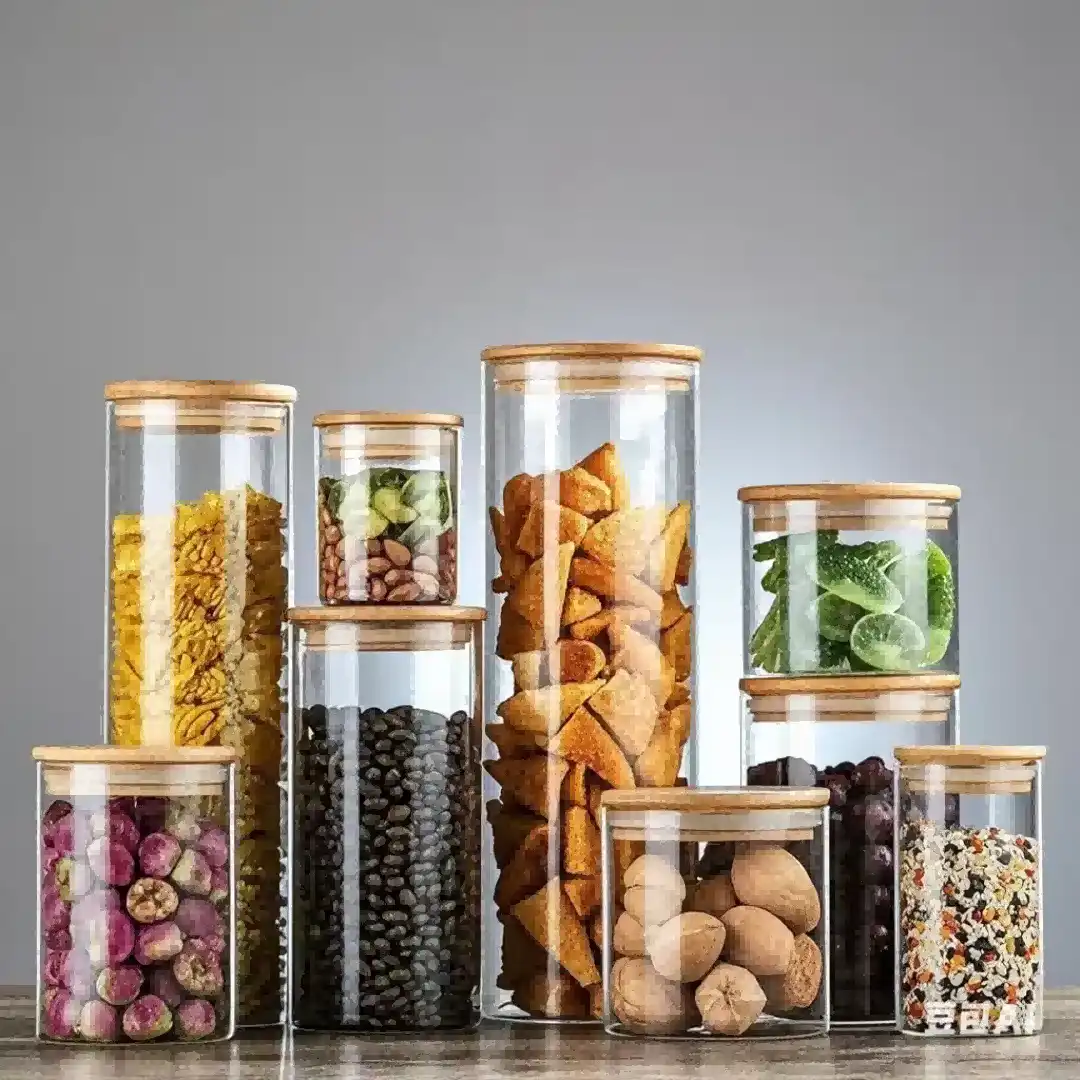
Comparing Eco Glass Containers with and without Accessories
Businesses can make better purchasing choices based on practical needs rather than initial cost alone when they know how accessory options affect usefulness.
Practical Utility Differences in Commercial Settings
Standard glass containers are good for basic storage needs, but models with extra features help with specific operating problems. When restaurant chains store a lot of ingredients, divider inserts help keep different steps of preparation separate within the same containers. For example, they can keep diced veggies away from dressings or dry and wet ingredients separate. With utensil holders, you don't have to store tools separately, which makes work areas less cluttered. Eco glass containers with these added features not only offer practical solutions but also support sustainability efforts, making them a great choice for businesses aiming to reduce their environmental impact.
Maintenance and Durability Considerations
When containers come with extras, the durability of those extras needs to be checked. Quality divider inserts made from food-grade silicone or borosilicate materials that work well with silicone stay in place even after many runs in the dishwasher. When accessories are added to containers, the sealing devices must still keep the air out, even though they are more complicated. Stackability gets more complicated—accessories should fit together well without affecting the seal's integrity or taking up too much room.
Cost-Benefit Analysis for Procurement Managers
Accessories-equipped containers usually cost 15–30% more to buy at first than basic types. But this extra pays off in a measured way by making operations more efficient. Companies that store different kinds of coffee beans find that divider inserts save them money because they don't have to buy separate cases for each SKU. Cross-contamination risks are lower and service setup time is shorter when catering services use utensil-integrated systems.
Finding the total cost of ownership over three years shows that accessory-enhanced systems often lead to fewer purchases of other products, which balances out the higher initial costs while providing better usefulness throughout the product's lifecycle.
How to Choose the Best Eco Glass Containers with Accessories for Your Business?
To make sure long-term buying success, choosing the right glass storage systems takes a thorough look at the needs of the industry, the standards for the materials used, and the supplier's abilities. Eco glass containers are an excellent choice when sustainability is a priority, as they meet both functional and environmental goals while ensuring reliable long-term performance.
Assessing Industry-Specific Requirements
Storage options are needed in a lot of different business areas. Restaurant chains put a high value on heat resistance for tasks in the back of the house that involve keeping and warming hot food. For baking brands to keep flour and sugar fresh in wet places, their containers need to be very good at closing. Buyers in laboratories need accurate marks for measurements and proof that the product is resistant to chemicals. Knowing these sector-specific goals helps you choose the right accessories, like dividers for food service to control portions, graded markings for schools, or stylish lid options for brands that will be sold in stores.
Material Quality and Accessory Compatibility Standards
Managers in charge of buying things should make sure that the containers they use are made of 3.3 borosilicate glass and have breaking points above 820°C and thermal stability above 270°C temperature differences. The quality standards for the accessories must match those of the main container. For example, bamboo lids should come from programs that support sustainable forests, stainless steel parts should be made from food-grade 304 or 316 alloys, and silicone dividers must have FDA or EU food contact certifications. Compatibility also includes dimensional limits, which make sure that tools fit tightly between runs of production.
Evaluating Supplier Reliability and Support
There are a few important traits that reliable sellers have that make them good for big purchases. They make sure that products are always available even when there are a lot of orders, let you make changes to the size, color, or marking of the product, and give you all the paperwork you need to ship it internationally. The warranty should cover problems with the way the product was made, and the service after the sale should include easy ways to get in touch and a quick response to quality concerns. Suppliers with more than ten years of experience in the field usually have better quality control systems and understand the practical pressures of their business clients.
By asking for samples before placing a large order, you can see for yourself how the material thickness, seal effectiveness, and accessory features work in the real-world situations your business will face every day.
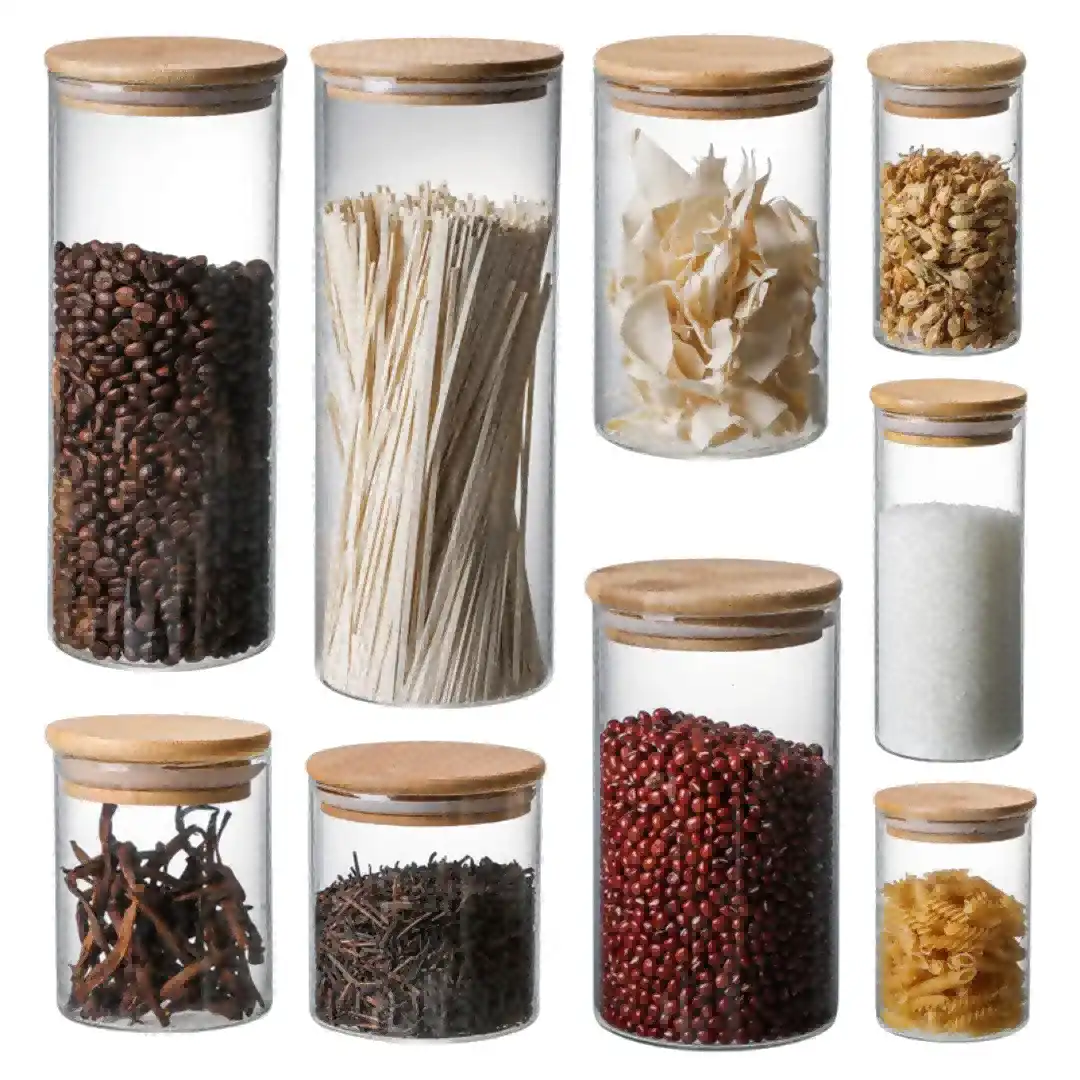
Buying Eco Glass Containers with Utensil Holders or Divider Inserts: Procurement Tips
Finding specialized glass storage solutions needs planning that strikes a balance between lowering costs, making sure the quality is good, and allowing for customization. Eco glass containers provide a sustainable option that meets these criteria, offering durability and functionality while supporting environmental goals.
Identifying Reputable B2B Sourcing Channels
Established business-to-business (B2B) sites connect buyers with verified eco glass container makers who offer cheap bulk prices. Most of the time, these platforms offer buyer safety tools, safe payment systems, and dispute settlement services that lower the risks of foreign purchasing. Wholesalers that focus on distributing goods often keep enough stock on hand to complete orders faster than direct factory orders, but there may not be as many ways to customize the items.
Specialized trade shows for food service tools and eco-friendly packaging are great places to see goods in person, compare prices from different sellers, and talk about terms in person. Aside from that, industry events also show off new item ideas before they're sold in stores.
Customization and Private Labeling Opportunities
Customization tools are very helpful for businesses that are building their brand personality through their own product lines. Eco glass containers can be decorated in a number of ways, such as by screen printing, laser etching, or applying decals with names and company messages. By coloring or painting products, you can change their colors to make them look unique, which helps people remember your brand. You can change the materials of the lids, the layouts of the dividers, and the designs of the combined tools that fit your specific work processes.
Customized goods usually have a minimum order quantity of around 100 units. This means that even small businesses or limited-edition product launches can get unique designs. Private labeling agreements let lifestyle brands and resellers sell products made by manufacturers under their own brand names. This helps them stand out in the market without having to spend a lot of money on production facilities.
Quality Assurance and Compliance Verification
Strict quality control keeps food safety standards high and saves buying investments. Ask for proof of approval that the product meets the necessary standards, such as FDA rules for U.S. markets, LFGB certification for European markets, or specific laboratory standards like ASTM thermal shock rates. The sample should be inspected to see how clear the glass is, how smooth the surface is to show that it was properly annealed, how well the seal holds up under pressure, and how well the accessories fit together.
Setting clear quality standards in purchase agreements makes people responsible and gives people options if the goods provided don't meet the standards that were agreed upon. Building long-term ties with sellers who always meet quality standards lowers the risk of buying things and makes the process of reordering easier over time.
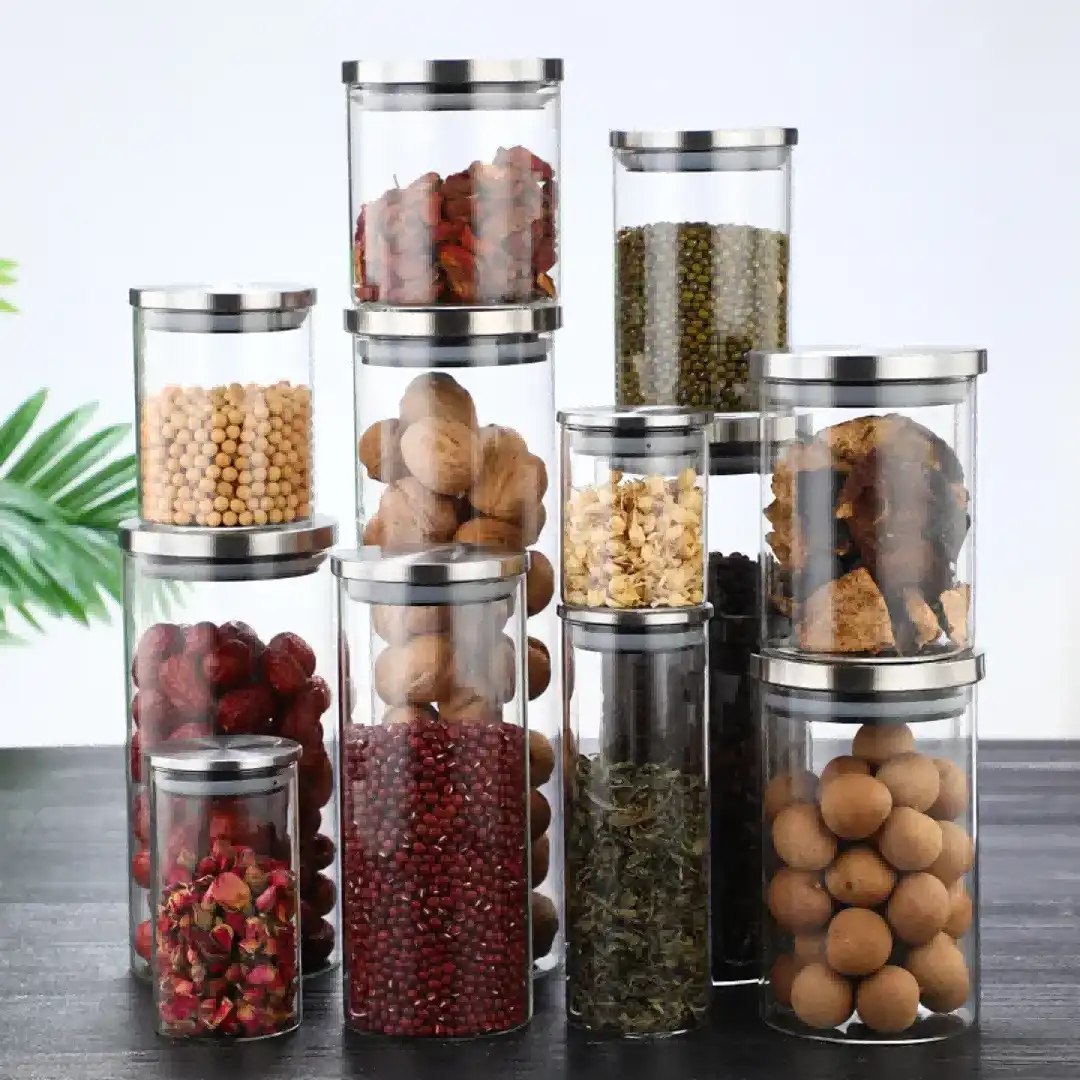
Future Trends and Innovations in Eco Glass Container Accessories
As manufacturers answer to business clients' requests for better functionality and environmental responsibility, the market for sustainable storage keeps changing. Eco glass containers are leading this shift, providing an efficient, environmentally friendly solution that meets both practical and sustainability needs.
Multifunctional Accessory Development
New innovations focus on tools that can be used for more than one thing within the same design. Now, lid systems come with built-in strainers, measurement marks, and modular divider connection points. Some companies make magnetic extension systems that let users change how the inside sections are set up based on their changing storage needs. Because these designs are so flexible, businesses don't have to keep as many specialized packages on hand, and they can be used for a wider range of menu items or product lines.
Biodegradable and Alternative Material Integration
Although borosilicate glass is already very good for the earth, more and more additional parts are made from biodegradable materials that are even better. In divider inserts and utensil holders, bamboo fiber composites are used instead of standard plastics. Natural cork gaskets close well and are made from a material that can be grown again. These material innovations cover the whole lifetime of a product, making sure that even parts that can be replaced follow the rules of the circular economy.
Market Demand Shifts Toward Modular Systems
More and more, businesses want storage systems that can be set up in different ways instead of containers that can only do one thing. Businesses can use replaceable accessory sets on modular accessory platforms to change the containers for different uses, like serving breakfast, making lunch, storing ingredients, or displaying items. Designs that are easy to clean, have parts that can go in the washing, and have few cracks or holes cut down on labor costs in high-volume settings where cleanliness directly affects profits.
When procurement managers predict these trends, they set up their companies to take advantage of new market possibilities. When you balance cost concerns with goals for sustainability and operational flexibility, you can make buying plans that meet both short-term and long-term business goals. Reading trade magazines and talking to suppliers about new materials and accessories is a good way to make sure that the decisions you make about what to buy are in line with the latest best practices for environmentally friendly food storage solutions.
Conclusion
Sustainable glass storage solutions with built-in tools meet the complex needs of modern food service businesses, labs, and retail brands that want to be environmentally friendly without losing utility. High borosilicate glass containers with divider inserts and utensil holders are better at keeping things organized, withstanding heat, and staying chemically stable than containers made of other materials. When making a buy choice, the total cost of ownership should be taken into account along with industry-specific needs, material certifications, supplier dependability, and the initial purchase price. As the market moves toward flexible, multifunctional designs with biodegradable accessory parts, companies that adopt these new ideas improve their working efficiency and sustainability while also meeting stricter environmental standards. Eco glass containers offer an ideal solution to these evolving demands.
FAQ
Q1: Can borosilicate glass containers with accessories go directly from freezer to oven?
A: Yes, good borosilicate glass can handle big changes in temperature because it has a low thermal expansion rate. Containers that can handle temperatures from -20°C to 130°C can safely go from the freezer to the microwave. Take off any non-glass parts, like bamboo lids or silicone dividers, before using the oven. These parts can usually handle lower temperatures than the glass body itself.
Q2: How do divider inserts affect the sealing performance of glass containers?
A: Well-thought-out divider systems keep the integrity of the container seal by being placed below the sealing surface and not getting in the way of the lid-to-rim contact. Good fillers are made of flexible materials that slightly contract when lids close, keeping air out. To keep things as fresh as possible, always make sure that the dividers are especially made for your container type.
Q3: What customization options work best for building brand recognition through glass containers?
A: Laser etching makes marking that lasts, is dishwasher-safe, and stays clear for the life of the product. Screen printing lets you use bright colors to make strong business statements. When you mix custom glass coloring with accessories in colors that aren't the same, like amber glass with natural bamboo lids, you get a unique look. Private labeling gives you full control over how the packaging looks and how the product is documented.
Q4: Are there minimum order requirements for containers with specialized accessories?
A: For normal accessory setups, most makers set minimum order numbers around 100 units. This means that medium-scale businesses can get access to custom designs. Depending on the need for tools, fully custom item designs may need higher minimums. Many sellers have open plans that let businesses mix different sizes in the same order to meet minimums and get a wide range of products.
Partner with Chilin Glass for Your Sustainable Storage Solutions
Hejian Chilin Glass Products Co., Ltd. has been making high-quality borosilicate glass containers for demanding industrial uses for more than ten years. Our lead-free, eco-friendly high borosilicate glass can handle temperature changes from -20°C to 130°C, making it durable enough for restaurant chains, baking brands, and institutional buyers. We offer a lot of customization choices, such as different capacity levels, a wide range of colors, and the ability to add accessories that work with your current processes. As a well-known company that sells eco glass containers, we help foreign buyers by providing full export paperwork, allowing flexible minimum order amounts starting at 100 units, and quick technical support. Email our team at sales@chilinglass.com to talk about how our environmentally friendly glass storage systems can help you run your business more efficiently while also helping you meet your environmental goals.
References
1. Chen, M., & Thompson, R. (2023). Sustainable Materials in Commercial Food Service: A Comprehensive Analysis of Borosilicate Glass Performance Standards. Journal of Food Safety and Environmental Materials, 18(4), 287-304.
2. Harrison, K. L. (2024). Thermal Shock Resistance in Food Storage Systems: Engineering Properties of High Borosilicate Glass. International Review of Material Science Applications, 31(2), 156-173.
3. National Restaurant Association Educational Foundation. (2023). Sustainable Procurement Strategies for Multi-Unit Restaurant Operations. Chicago: NRAEF Research Division.
4. Patel, S., & Williams, J. (2024). Cost-Benefit Analysis of Reusable Glass Storage Systems in Commercial Kitchen Environments. Food Service Management Quarterly, 42(1), 78-95.
5. Roberts, E. M. (2023). Accessory Design Innovation in Modular Food Storage Solutions: Market Trends and Consumer Preferences. Packaging Technology and Innovation, 27(3), 412-429.
6. Zhang, L., Anderson, P., & Martinez, C. (2024). Environmental Impact Assessment of Glass versus Plastic Food Storage Containers: A Lifecycle Analysis. Sustainability in Food Systems, 15(1), 203-221.
YOU MAY LIKE